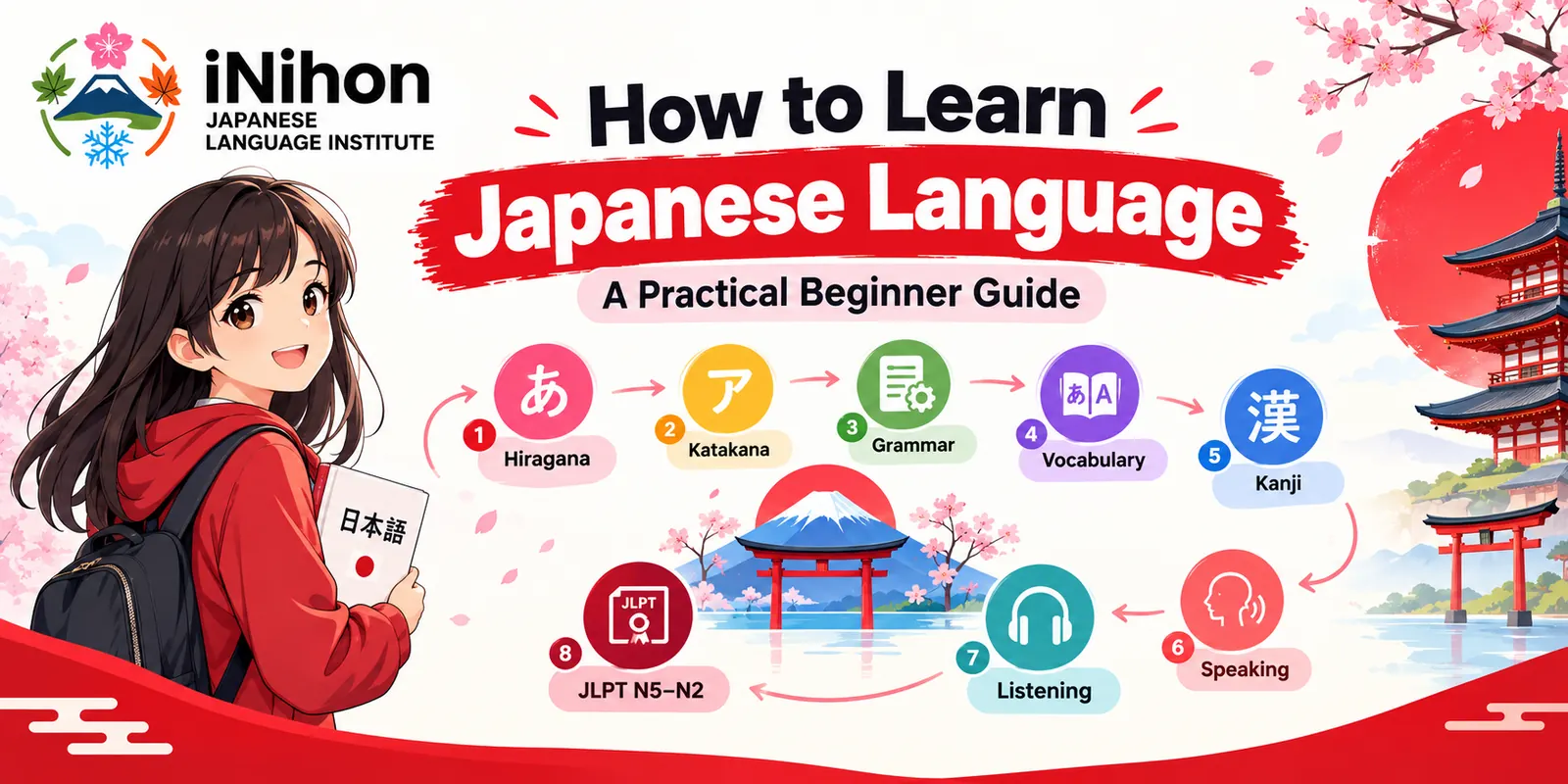
How to Learn Japanese: A Practical Guide for Beginners
The short answer: to learn Japanese, start with hiragana and katakana, build basic grammar and vocabulary, practice speaking daily with a trained teacher, and work toward a goal such as the JLPT exam. Most beginners reach basic conversation level (JLPT N5) in about 4 to 6 months with regular practice and good guidance.
If you have ever wondered where to begin, this guide walks you through each stage clearly and honestly.
Why People Are Learning Japanese Today
Japanese opens doors to careers in IT, manufacturing, engineering, translation, hospitality, and education. Many students also learn it for studying in Japan, working with Japanese companies, or simply because they love anime, music, and culture. Whatever your reason, a clear plan makes the journey much easier.
How Long Does It Take to Learn Japanese?
Learning time depends on your goal and how often you practice.
JLPT N5 (beginner): around 4 to 6 months
JLPT N4 (elementary): around 8 to 12 months
JLPT N3 (intermediate): around 1.5 to 2 years
JLPT N2 (business level): around 2.5 to 3 years
Studying a little every day beats studying for hours once a week.
Step 1: Master Hiragana and Katakana First
These two scripts are the foundation of the language. Each has 46 basic characters, and most learners can read them comfortably within two to three weeks. Do not rely on romaji (English letters) for long. It slows down your reading and pronunciation later.
Step 2: Learn Basic Grammar and Sentence Patterns
Japanese sentence order is different from English. The verb comes at the end, and small words called particles show the role of each word. Start with simple patterns like introducing yourself, asking questions, and talking about daily routines. Understanding particles early saves you from confusion later.
Step 3: Build Vocabulary the Smart Way
Focus on the most common 500 to 800 words first. Learn them in context, inside short sentences, rather than as isolated lists. Revisit them regularly so they move into long term memory.
Step 4: Start Kanji Gradually
Kanji looks intimidating, but it becomes manageable when you learn it step by step. Begin with simple, frequently used characters such as numbers, days, and common nouns. Learn the meaning, the reading, and a few example words together.
Step 5: Practice Speaking and Listening from Day One
Many learners study for months and still freeze when they have to speak. Speak aloud every day, even if it is only repeating sentences. Listen to simple Japanese conversations and slowly increase the difficulty. A teacher who corrects your pronunciation early will help you avoid habits that are hard to fix later.
Step 6: Set a Goal with the JLPT
The Japanese Language Proficiency Test gives your learning a clear direction and a recognized certificate. It is accepted by employers and universities across the world. Set your target level and work backward with a study schedule.
The iNihon Japanese Language Institute Teaching Methodology
At iNihon Japanese Language Institute, the focus is on helping students actually use Japanese, not just memorize it. The teaching approach is built around a few simple principles.
Structured level by level learning. Courses follow a clear path from beginner to advanced, aligned with JLPT levels, so every student knows exactly where they are and what comes next.
Speaking first approach. Students begin speaking in class from the very first sessions. Role plays, dialogues, and real life situations build confidence early.
Strong script foundation. Hiragana and katakana are taught carefully before moving ahead, so reading and writing stay accurate and natural.
Grammar through context. Instead of memorizing rules in isolation, grammar is taught through everyday conversations and practical examples that students can use right away.
Regular practice and revision. Homework, quizzes, and revision sessions keep earlier lessons fresh and steadily improve retention.
JLPT focused preparation. Mock tests, listening drills, and reading practice prepare students for exam day with clarity and confidence.
Cultural understanding. Language and culture go together. Students learn Japanese manners, workplace etiquette, and communication style, which is especially valuable for those aiming for careers with Japanese companies.
Supportive trainers and small learning groups. Personal attention helps students ask questions freely, fix mistakes quickly, and stay motivated.
Common Mistakes to Avoid
Depending on romaji for too long
Skipping speaking practice
Trying to learn too much kanji at once
Studying irregularly
Learning without a clear goal or guidance
Daily Study Routine for Beginners
A simple routine of 45 to 60 minutes works well. Spend 15 minutes on vocabulary revision, 15 minutes on grammar, 10 minutes on kanji or writing, and 15 minutes on listening and speaking. Consistency matters more than intensity.
Frequently Asked Questions
Is Japanese hard to learn?
Japanese has a new writing system and a different sentence structure, but its pronunciation is simple and its grammar is very consistent. With the right guidance, it is very achievable.
Can I learn Japanese on my own?
Yes, but self study often leads to pronunciation mistakes and gaps in grammar. Guided classes with a trained teacher make progress faster and more reliable.
What is the best way to learn Japanese for beginners?
Begin with hiragana and katakana, learn basic grammar, practice speaking daily, and join a structured course that follows JLPT levels.
How many hours should I study each day?
About one hour a day is enough for steady progress.
Is JLPT certification necessary?
It is not compulsory, but it is the most widely accepted proof of Japanese ability for jobs and higher studies.
Are online Japanese classes effective?
Yes, when they include live interaction, speaking practice, and regular feedback from trainers.
Start Your Japanese Journey with iNihon
Learning Japanese becomes simple when you have the right plan and the right mentors. iNihon Japanese Language Institute offers structured courses from beginner to advanced levels, JLPT preparation, and practical speaking training to help you reach your goals with confidence.
Contact iNihon today to book a free demo class and take your first step toward speaking Japanese.